Coral injuries are not common in Sopelana, but knowing basic first aid matters if you plan to surf reef breaks abroad. Hitting coral can cause an abrasion, leave small fragments in the skin and expose an open wound to seawater. This guide provides preventive information and is not a substitute for advice from a healthcare professional.
Why coral wounds need careful attention
A coral wound can be difficult to clean and may become infected, especially if fragments remain in the tissue or you return to the sea before it has closed. Some organisms, such as fire coral, can also cause severe pain and a skin reaction on contact.
First aid for a coral cut
- Leave the water and control the bleeding. Apply pressure with clean gauze or cloth. Seek urgent help if bleeding is heavy or does not stop.
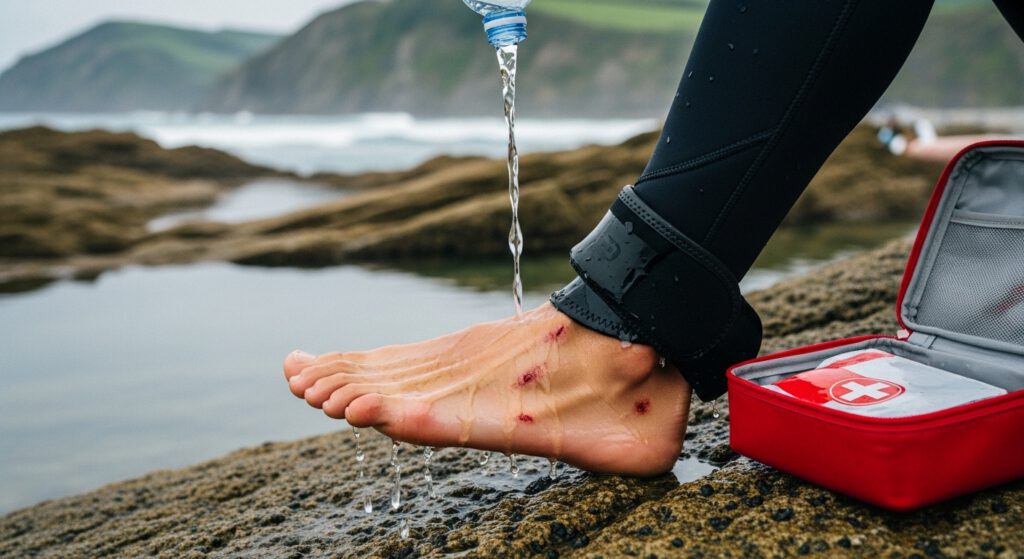
- Wash your hands and clean the wound. Rinse thoroughly with clean drinking water and gently wash with soap and water. Remove only superficial debris that comes away easily; do not dig into the wound.
- Cover the area. Pat it dry and use a clean, non-stick dressing. Replace it whenever it becomes wet or dirty.
- Do not self-medicate. Antibiotics and other treatments should be prescribed by a healthcare professional when appropriate.
A coral cut is not the same as a fire coral sting
Do not use lemon juice or vinegar to disinfect a cut. For a fire coral reaction without an open wound, Divers Alert Network recommends vinegar to help inactivate stinging cells that may remain on the skin. If there is also an open wound, treat it as a wound and seek medical assessment when it is extensive, deep or painful.
When to seek medical care
Seek medical help for embedded debris, a deep wound, persistent bleeding, eye or joint involvement, or worsening symptoms. Warning signs include spreading redness, warmth, swelling, increasing pain, pus, fever, blisters or dark skin changes. People with liver disease, diabetes or a weakened immune system should be particularly cautious after a wound is exposed to seawater.
Ask a healthcare professional whether your tetanus vaccination is up to date, as the need for a dose depends on the wound and your vaccination history.
How to prevent reef injuries
- Research the spot: understand the depth, tides, currents and safe entry and exit points.
- Never dive head-first: protect your head during a fall and avoid extending your legs towards the reef.
- Use suitable equipment: reef booties and a full suit can reduce contact, although they cannot remove all risk.
- Respect the reef: avoid standing on or touching coral, both for your safety and to protect it.
Before travelling, review how to protect yourself from the sun while surfing and pack a small first-aid kit.
Surfing reef breaks more safely
Technique and awareness are essential. In our surf lessons, we work progressively on positioning, paddling and safe falls before moving on to more demanding conditions.
- Positioning: keep clear references for the safe zone and exit route.
- Paddling: efficient paddling helps you anticipate and position yourself early.
- Falling: cover your head with your arms and avoid pushing towards the bottom.
Returning to the water after an injury
Stay out of the sea while the wound remains open. Coastal water can contain microorganisms that infect wounds. Wait until it has closed and is healing well; if you are unsure or it reopens, seek advice before returning to the water.